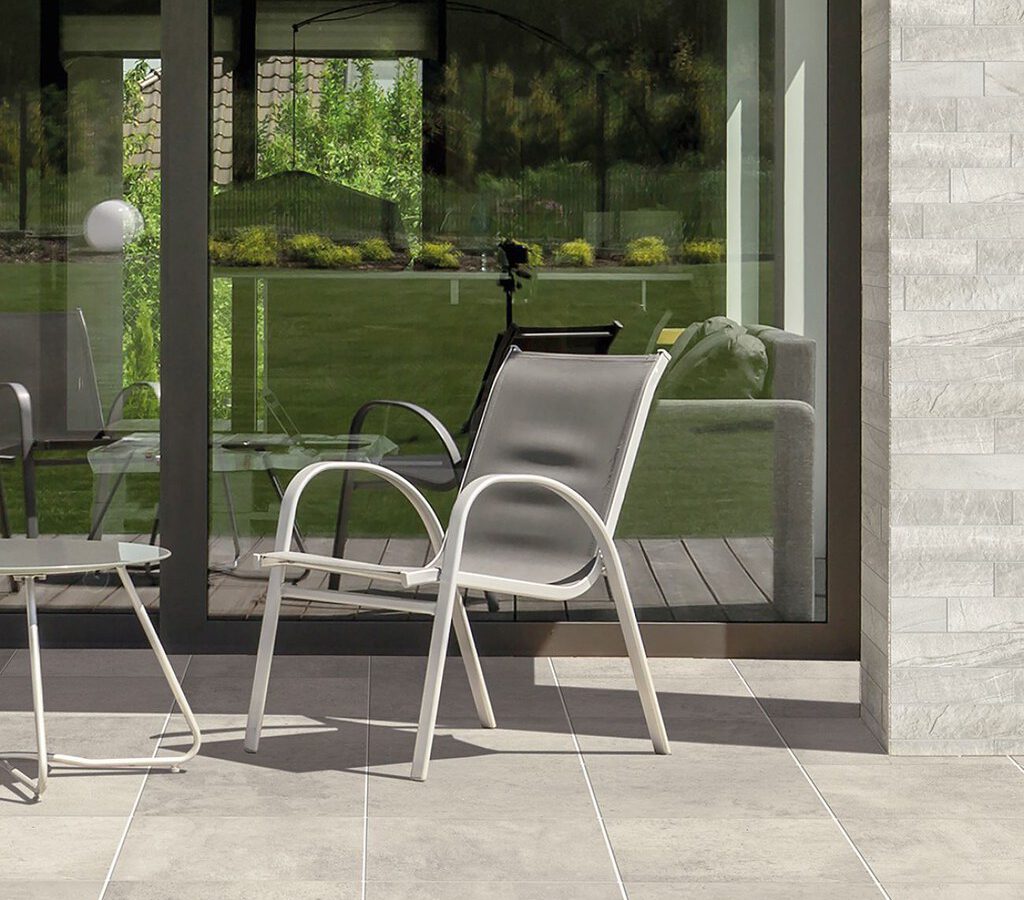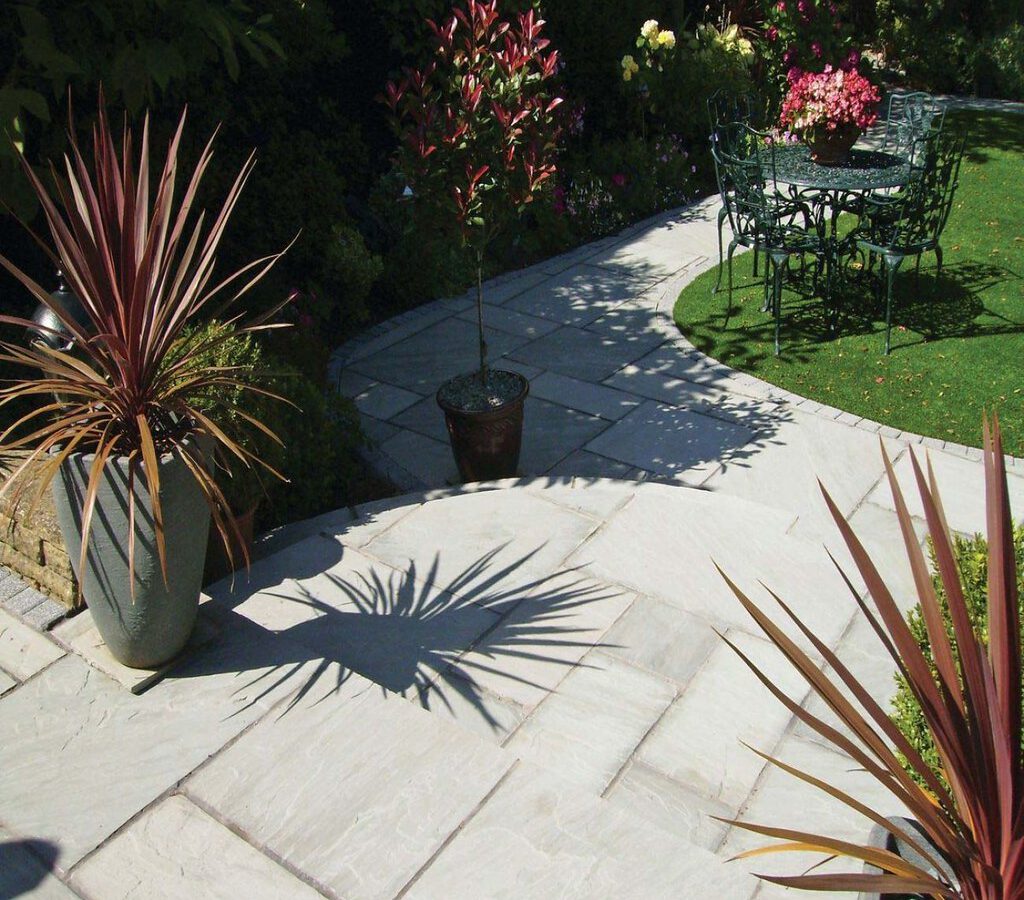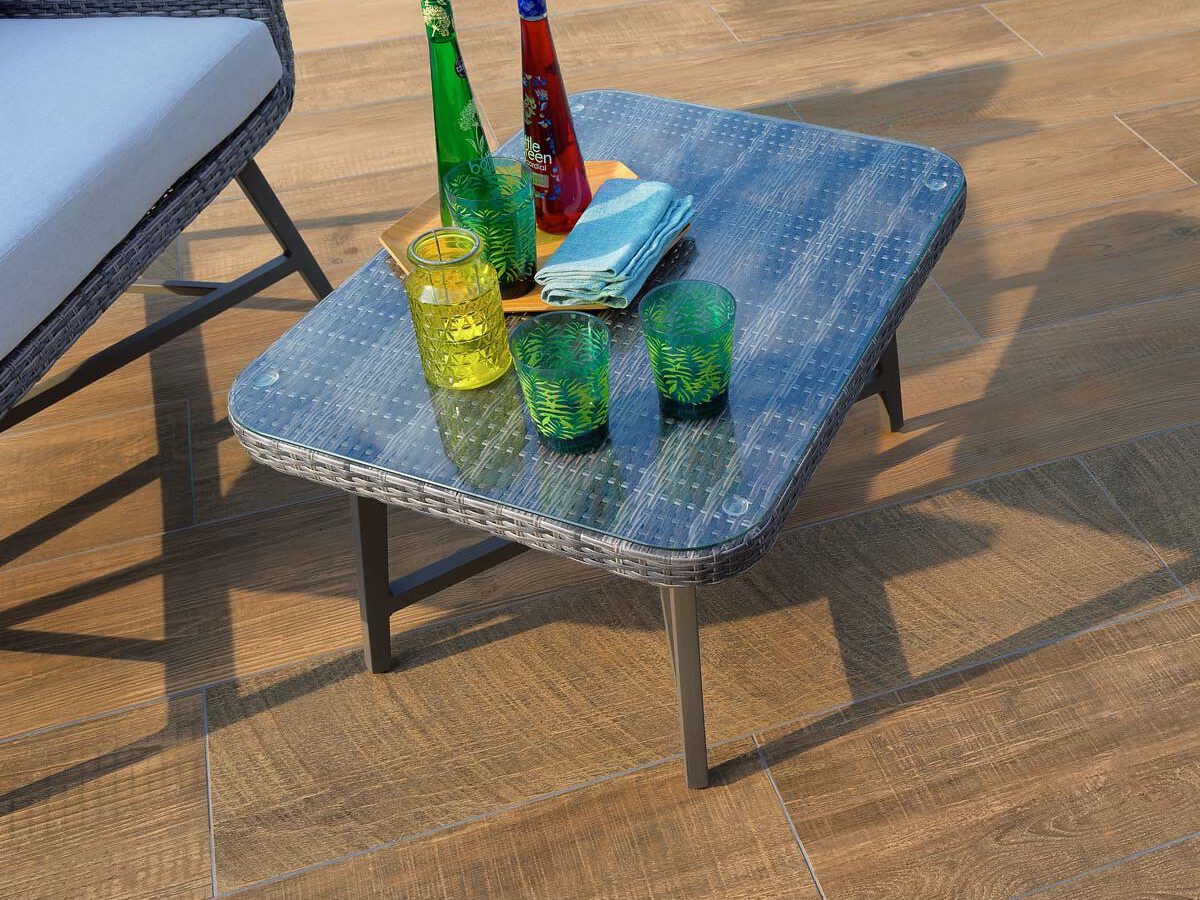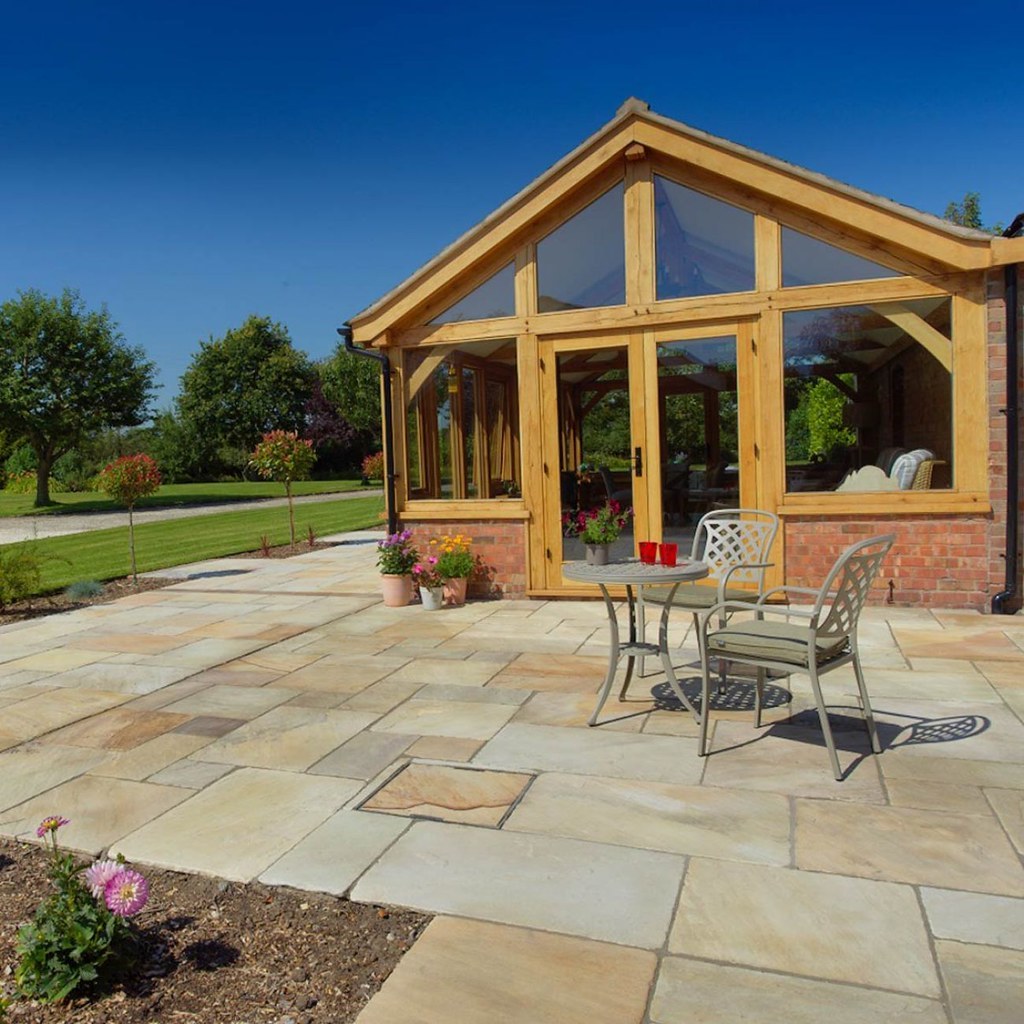
Outdoor porcelain has changed what a patio can be, and these are the questions we hear most about it. For anything else, email [email protected] or request a free quotation.
Questions tilers actually get
Why choose porcelain over traditional paving slabs?▾
Outdoor porcelain is fired at high temperature into a dense 20mm tile that absorbs almost no water. In practice that means it doesn’t stain the way concrete slabs do, doesn’t fade, never needs sealing, and shrugs off spilled wine and barbecue fat. The colour and texture run consistently, so a large terrace looks like one considered surface rather than a patchwork.
The honest caveat is that porcelain demands proper installation: a sound sub-base, a full mortar bed with a priming slurry on the back of each tile, and correct falls. Laid like ordinary slabs, it will fail. Laid properly, it outlasts them.
Will outdoor porcelain survive a British winter?▾
Yes. Frost damage happens when water soaks into a material, freezes and expands, and porcelain’s near-zero water absorption means there’s essentially nothing for the frost to get hold of. It’s why porcelain is frost-proof where some natural stone and concrete products gradually spall and flake.
When winter failures do happen, the tile is rarely the culprit. Poor bedding, voids under the tile or standing water from inadequate falls are the usual causes, and all three come down to installation, which is exactly where our 10-year workmanship guarantee applies.
How do I clean it, and will it grow moss?▾
Porcelain gives moss and algae very little to feed on because it doesn’t hold moisture the way porous stone and concrete do. Growth that does appear tends to sit on the surface or in the joints rather than rooting into the material, so an occasional wash with warm water and a mild detergent keeps it looking fresh.
If you use a pressure washer, keep it on a sensible setting and at an angle, mainly to avoid blasting out the jointing compound rather than for the tiles’ sake.
What time of year can you lay a patio?▾
Spring through autumn is the natural season, but the real constraint is the materials rather than the calendar: adhesives and mortars need temperatures reliably above about 5°C and dry conditions while they cure. Mild, settled spells in winter are perfectly workable, and frosty or persistently wet weather is not.
Summer diaries fill quickly, so if you want a terrace ready for the warm weather, it’s worth requesting your free quotation in winter or early spring. Design visits run evenings and weekends, so planning ahead is easy to fit around work.