The inside of a shower enclosure is the wettest, hardest-worked tiled surface in any home. Tilewright retiles tired enclosures, tiles new ones from bare studwork, and puts right showers that have failed early, almost always because the walls behind them were never properly prepared.
Shower tiling that shrugs off a daily soaking
What the service covers
Materials and options
Porcelain is our usual recommendation inside an enclosure: it is denser and less porous than ceramic, so it resists staining and stays looking fresh for longer. Large-format tiles with rectified edges keep grout lines to a minimum, which means less to clean; mosaics earn their place in niches and on curves. Natural stone can look wonderful in a shower, but it needs sealing and a little ongoing care, and we will tell you so plainly before you commit.
How we approach it
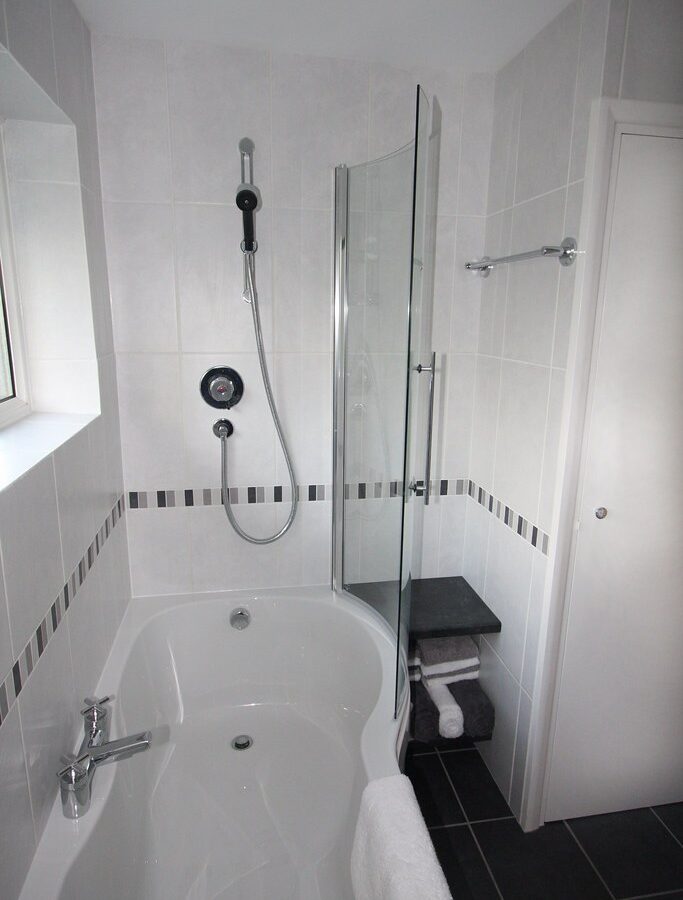
Ordinary plasterboard weakens when it gets wet, so we tile onto cement-based backer board or a tanked surface, never onto bare board in the wet zone. The enclosure is tanked with a waterproof membrane, with jointing tape worked into internal corners and around the valve and outlets. We set out so cut tiles sit evenly at each side and the courses line through around the niche, then fix with flexible adhesive. Where tiling meets the tray or bath we leave a flexible joint filled with silicone rather than grout, because that junction moves slightly every time the shower is used.
Why it matters
Most shower failures happen out of sight, behind the tiles, and only show once the damage is done. A shower built on proper preparation is quietly uneventful for decades, which is exactly how it should be. Every enclosure we tile is covered by our insurance-backed 10-year workmanship guarantee. If you are weighing up an open, screen-only space instead, our wet rooms and tanking page explains the difference.
Tell us what you have in mind through our free quotation form and we will send a detailed written quotation within 48 hours.
Questions tilers actually get
Can you tile straight onto plasterboard in a shower?▾
Not onto bare board in the wet zone. Plasterboard loses its strength when it gets damp, so we use cement-based backer board or tank the surface with a waterproof membrane before any tiling starts.
Why is the joint at the bath or tray finished in silicone rather than grout?▾
That junction moves slightly every time the shower is used, and rigid grout would crack. A flexible sanitary silicone joint absorbs the movement and keeps water out.
My existing shower silicone has gone mouldy. Is that a job you would take on?▾
Yes, silicone renewal is one of our regular smaller jobs. Ask through our contact form and we will advise honestly on whether renewal or retiling is the better course for your shower.